
Eye tracking follows the direction of the gaze to move a pointer and trigger actions. A camera watches the eyes and software works out which point of the screen is being looked at.
It serves people who cannot use their hands, for instance with paralysis or a neuromuscular condition. Combined with an on-screen keyboard and speech synthesis, it makes writing, browsing and communicating possible.
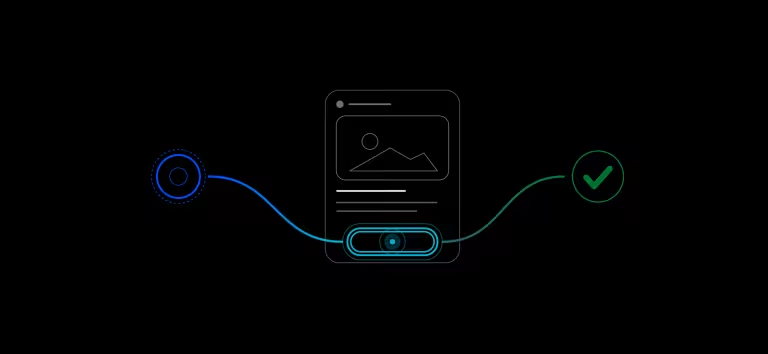
Selection usually happens by holding the gaze on a target for a short moment. That principle calls for large, well-spaced targets and interfaces that do not react when the gaze merely passes over them.
Calibration is required, and eye strain remains a limit. Plain, predictable and forgiving interfaces are the easiest to operate.