
A braille display shows on-screen text as dots that rise and fall. Connected to a screen reader, it allows silent reading, checking a spelling or reviewing code.
Haptic feedback works through vibration or pressure: a watch that signals a turn, a phone that confirms an action, a cane that warns of an obstacle.
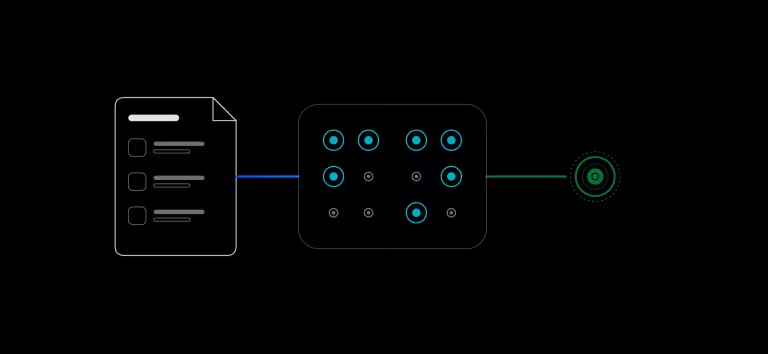
Both approaches rely on touch, a discreet channel that leaves hearing free. They are precious for deafblind people, for whom synthetic speech is not enough.
For them to work, content must remain real text, and tactile signals must be few, distinct and always backed by another form of information.