
A screen reader turns what is displayed into speech or braille. It does not look at the page: it walks through its structure and announces headings, links, buttons and the state of form fields.
For a blind or partially sighted person, it is the way into the web, applications and documents. Current operating systems ship with one, and specialised software rounds out the choice.
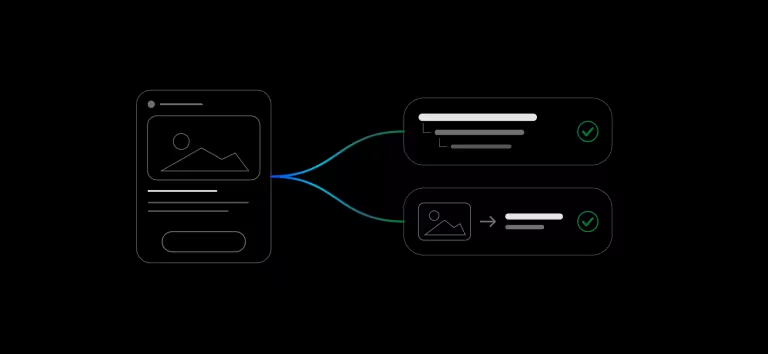
The quality of the experience depends first on the code. Well-ordered headings, described images, explicit labels and keyboard-operable components make navigation smooth; without them it becomes laborious, sometimes impossible.
Designing for a screen reader therefore means designing a clear structure. Everyone benefits, including search engines, voice assistants and readers in a hurry.